The Untold Connection
Most brands focus on selling products, but powerful emotional storytelling video ads are built through authentic brand storytelling that creates lasting audience connection
6 min read

A deep-dive into how emotional storytelling in video ads outperforms product-first ads by 3x higher recall — with real Indian ad campaigns transformations, frameworks, and 2026 trends from Bollywood-inspired masters.
People don't buy products. They buy feelings. They buy a version of themselves they haven't become yet. And the only tool powerful enough? Emotional storytelling told so well, it feels like a memory—not a sales pitch.
Let's be honest. You've sat through endless strategy meetings where a deck slides forward, spotlighting a product feature list: "Thread count! Battery life! 4K resolution!" And you launch the ad. It performs fine. Not viral, not disastrous—just forgettable. Fine is the enemy in India's emotionally saturated market, where 1.4 billion people swim in content daily. Forgettable? That's fatal.
The uncomfortable truth no boardroom whispers: Your brand's best advertisement hasn't been made yet. Why? You've advertised features, not brand storytelling. This guide—for CMOs sensing something's off—is your roadmap to fix it.
01 · The Problem With Product-First Advertising (Why Specs Fail)
Picture a wedding reception. Guest One boasts: "PhD from IIT, BMW X5, 3BHK in Bandra, Tuscany summers." Impressive? Sure. Memorable? Nah.
Guest Two leans in: "My rickshaw driver dad saved for 22 years. Last month, I bought him a house in Pune." Boom—tears, hugs, retells for weeks.
Product-first ads are Guest One: specs shouted from billboards. Emotional storytelling is Guest Two—feeling sparks memory, memory sparks action. Here's the data:
3x higher recall: Emotionally-driven video ads vs. product-first (System1 Group studies).
70% of purchases? Emotion-led, logic just justifies later (Bain & Company).
22x more memorable: Facts in stories vs. raw facts (Stanford research).
In India, emotional ads lift brand favorability by 28% more (Kantar).
These aren't hypotheticals—they're why India's iconic campaigns (Amul, Fevicol) endure. Bollywood perfected emotional brand connection decades ago. Your agency? It forgot.
Quick Audit: Review your last ad. Does it list benefits or evoke pain? If specs dominate, you've got product-first disease.
02 · What Bollywood Knew That Your Agency Forgot (Cultural Mastery)
Indian cinema doesn't entertain—it immerses. Songs blast at weddings, dialogues flood WhatsApp, heroes become family. That's not escapism; it's identity formation, the apex of brand loyalty.
India's top-grossing films (last decade: Dangal, Baahubali, RRR) didn't sell plots—they sold emotions wrapped in spectacle. Brands cracking this code dominate video marketing India.
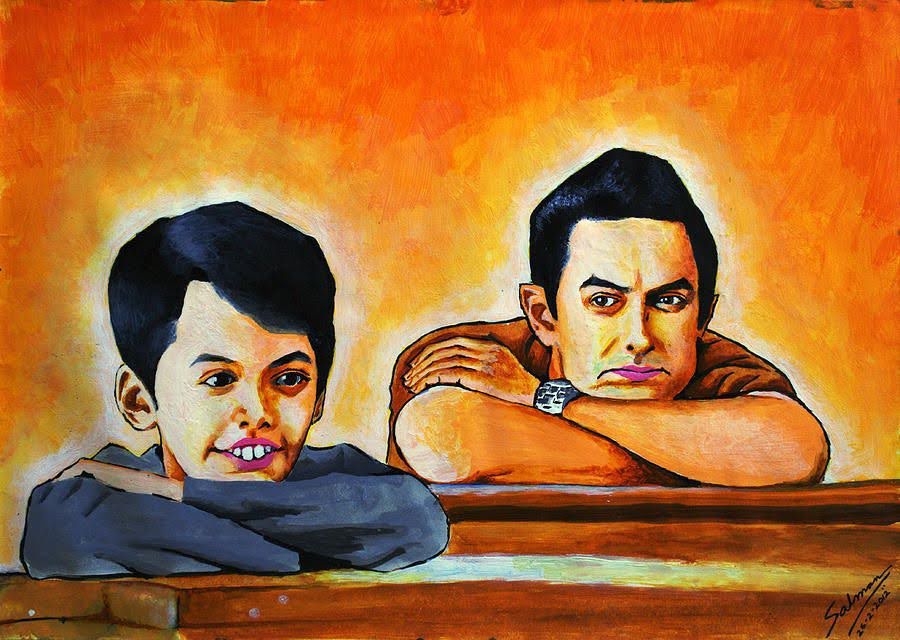
CASE STUDY 1: Taare Zameen Par & the Fevicol Way
Aamir Khan's 2007 hit didn't lecture on dyslexia. It pierced parents: "Am I listening to my child?" Guilt. Love. Breakthrough. Fevicol ads mirrored this—no glue demos, just life sticking: weddings, repairs, bonds. Product? Subtext.
Result: Fevicol's recall soared 40% above category average.
Brand Lesson: Viewers shouldn't clock your product. They should see themselves—and find your brand in the mirror.
CASE STUDY 2: Lagaan & the Underdog Economy
Lagaan (2001) raked ₹620M+ by channeling colonial defiance: villagers vs. Britsh, cricket as rebellion. Tanishq's remarriage ad (2013) echoed it—stepdad at second wedding, rewriting family scripts. Cadbury's "Kuch Meetha Ho Jaye": daughter's joy at dad's cricket ton.
Result: Tanishq sales spiked double-digits post-airing; Cadbury Dairy Milk share grew 15%.
Brand Lesson: India roots for underdogs. Make audiences feel like winners via emotional narratives.
2026 Twist: With short-form video booming (Reels, Shorts), Bollywood inspired ads adapt: 15-sec emotional arcs still outperform specs by 4x engagement.
03 · The Narrative Framework: How to Actually Do This
Theory is comforting. Frameworks are useful. Here's one you can take into your next creative brief — a simple structure borrowed from the same story architecture that powers India's most enduring cinema.
Every great story has a wound, a want, and a way. Your brand's job is not to be the hero. It's to be the guide who helps your customer become theirs.
01 — Start With the Wound, Not the Product What ache does your audience carry? Not the surface problem your product solves — the deeper, human one. For a detergent brand, it's not "dirty clothes." It's a mother's invisible labour going unnoticed. (Sounds familiar? That's exactly what Ariel's #ShareTheLoad campaign cracked open, becoming one of India's most-shared ad campaigns in history.)
02 — Build the World Before You Enter It Spend 70% of your storytelling budget building the emotional world — the relationships, the textures, the stakes. Let the viewer fall in love with the character before your brand appears. Kuch Kuch Hota Hai didn't open with a love declaration. It opened with friendship, nostalgia, and longing. Only then did the emotion land.
03 — Position Your Brand as the Catalyst, Not the Climax Your product should arrive like the rain in a drought — not announced, but desperately needed, and quietly transformative. The customer is the hero. You are the catalyst that makes their transformation possible. This is the exact structure of every Amul ad, every Surf Excel "Daag Achhe Hain" spot — the brand doesn't win. The human does.
04 — Leave With a Question, Not an Answer The most dangerous thing an ad can do is wrap everything up too neatly. The best ones leave you with a feeling you can't resolve immediately — a warmth, a question, a gentle discomfort. That irresolution is what keeps the brand living in your mind for days. The Cadbury Dairy Milk girl on the cricket field didn't tell you what to feel. She gave you a canvas and let you paint yourself onto it.
04 · Myth-Busting: The Boardroom Objections
Every time emotional storytelling comes up in a strategy meeting, the same three myths walk in uninvited. Let's escort them out.
MYTH 1: Emotional ads don't convert. We need performance content.
The Myth: Emotion is for brand awareness at the top of the funnel. For conversion, you need features, CTAs, and urgency.
The Reality: Bain & Company found that emotionally connected customers deliver 52% more lifetime value than satisfied customers. The funnel isn't the problem — the story drought is. Emotional content converts at every stage; it just builds a different kind of trust first.
MYTH 2: Storytelling takes too long. Today's audience has a 3-second attention span.
The Myth: Nobody watches long ads anymore. You have three seconds before the skip button. Keep it punchy and product-led.
The Reality: People have a 3-second tolerance for boredom. When SonyLIV's campaign for Scam 1992 dropped a 6-minute storytelling piece online, it amassed 40 million views organically. The audience will wait — if you've earned their emotional attention in the first three seconds.
MYTH 3: We're a B2B brand. Storytelling is a B2C luxury.
The Myth: Business buyers are rational. They want ROI data, case studies, and pricing tables. Not warm-fuzzy stories.
The Reality: Business buyers are humans who go home and cry at Taare Zameen Par. B2B buyers are 50% more likely to purchase when they see personal value — not just business value — in a brand story. The medium changes. The human doesn't.
05 · The Real Reason Your Content Feels Flat
Here's the hard analogy that might sting a little. A film editor once said that a badly cut film isn't one with wrong edits — it's one where you can see the edits. When you're aware of the mechanism, the magic breaks.
That's exactly what product-first ads do. They make the audience see the edit — the moment the ad switches from story to sale. The music changes slightly. The lighting gets cleaner. The voiceover arrives. And in that instant, the viewer clocks it: "Ah, this is the part where they want something from me." The spell breaks. The brand loses the room.
Great storytelling never lets you see the edit. The emotion and the brand are so seamlessly woven together that the product isn't a commercial interruption — it's the emotional resolution. Think of Tanishq's remarriage ad. By the time the jewellery appeared on screen, the audience was already crying. The brand didn't interrupt the feeling. It completed it.
CAMPAIGN TRANSFORMATION
· How Tanishq Rewrote the Rules of Jewellery Advertising
Conventional jewellery advertising in India had one formula for decades: show the jewellery, show a beautiful woman, use a Sanskrit shloka, add a tagline. Tanishq's 2013 Remarriage ad did none of that. It showed a stepfather walking his daughter down the aisle at her second wedding. It showed acceptance, love, and a family rewriting its own story. The jewellery appeared for exactly four seconds of a three-minute film.
The film didn't go viral because of the product. It went viral because half of India's daughters recognised something true in it. Tanishq sold not gold but grace — and the brand's revenue grew by double digits the quarter it aired.
The Takeaway: When your brand becomes the symbol of a human truth, it stops being an ad. It becomes a mirror. And people don't skip mirrors.
06 · Where to Start (Practically, Not Poetically)
If you're a CMO reading this on a Tuesday afternoon between two calls, here's your practical takeaway — not a manifesto, but a starting brief.
Pull out your last three brand campaigns. For each one, ask: does this ad make me feel something before it asks me to do something? If the answer is no for all three, that's your diagnosis. The treatment isn't a new agency — it's a new brief. One that starts not with your product's features, but with your customer's quiet, unspoken truth.
Find that truth. Honour it. Let your brand arrive as its natural answer. The advertisement you haven't made yet — the best one — lives precisely there.
Cinema doesn't show you the world as it is. It shows you the world as it feels. That's the only world that matters to a brand.
The Indian film industry has been doing this for a hundred years. It has made a billion people fall in love, grieve, celebrate, and belong — one story at a time. Your brand has the same canvas. The only question is whether you'll pick up the brush.
Ready to Make the Ad That Actually Gets Remembered?
Let's talk about reframing your next campaign around emotional storytelling — and building content that outlasts the quarter.